

Posted
Family Sprinter Camper Van Builds: What Makes a Layout Work for Kids and Gear
Building a camper van for a family is a completely different problem than building one for a solo traveler or a couple. The math gets harder, the stakes get higher, and the gear gets messier. You're not just fitting two adults into a clever little rolling bedroom. You're figuring out where four people sleep, where wet ski boots go, how a six-year-old gets to the toilet at 2am without waking everyone up, and whether there's still room for a full-size coffee setup. It's a lot. But when you get the layout right, a family Sprinter van can be one of the best things that ever happened to your camping life.
 ×
What are the biggest layout challenges for a family van build?
Space is the obvious constraint, but the real challenge is that every family member has different needs and those needs change constantly. A toddler needs a safe sleep space, full stop. A ten-year-old needs somewhere to sit that isn't a lap. Teenagers need a little separation from parents. Grandparents need a step that won't send them to urgent care. Everyone needs to be able to find their stuff without tearing the van apart at 7pm in a campground parking lot.
The standard extended 170” wheelbase Sprinter gives you roughly 11 feet of usable interior floor space. That's not a lot. Every inch has to earn its place. The moment you start layering in kid-specific needs, the usual adult-optimized layouts stop working. A fixed rear queen bed is gorgeous for two people and completely impractical for a family of four. A galley designed around two adults moving around each other becomes a pinch point the second backpacks, rain jackets, and a pair of ski boots show up. The fix isn't a different kitchen mechanism — it's a fixed kitchen designed from day one around the real-world chaos of a family using it, with everything in place and ready to go.
The builds that actually work for families tend to share a few core principles: vertical space is used aggressively, sleeping and living zones are clearly separated, and storage is built around the specific gear the family carries rather than a generic idea of "stuff."
How do pop-top roofs change the equation for family sleeping arrangements?
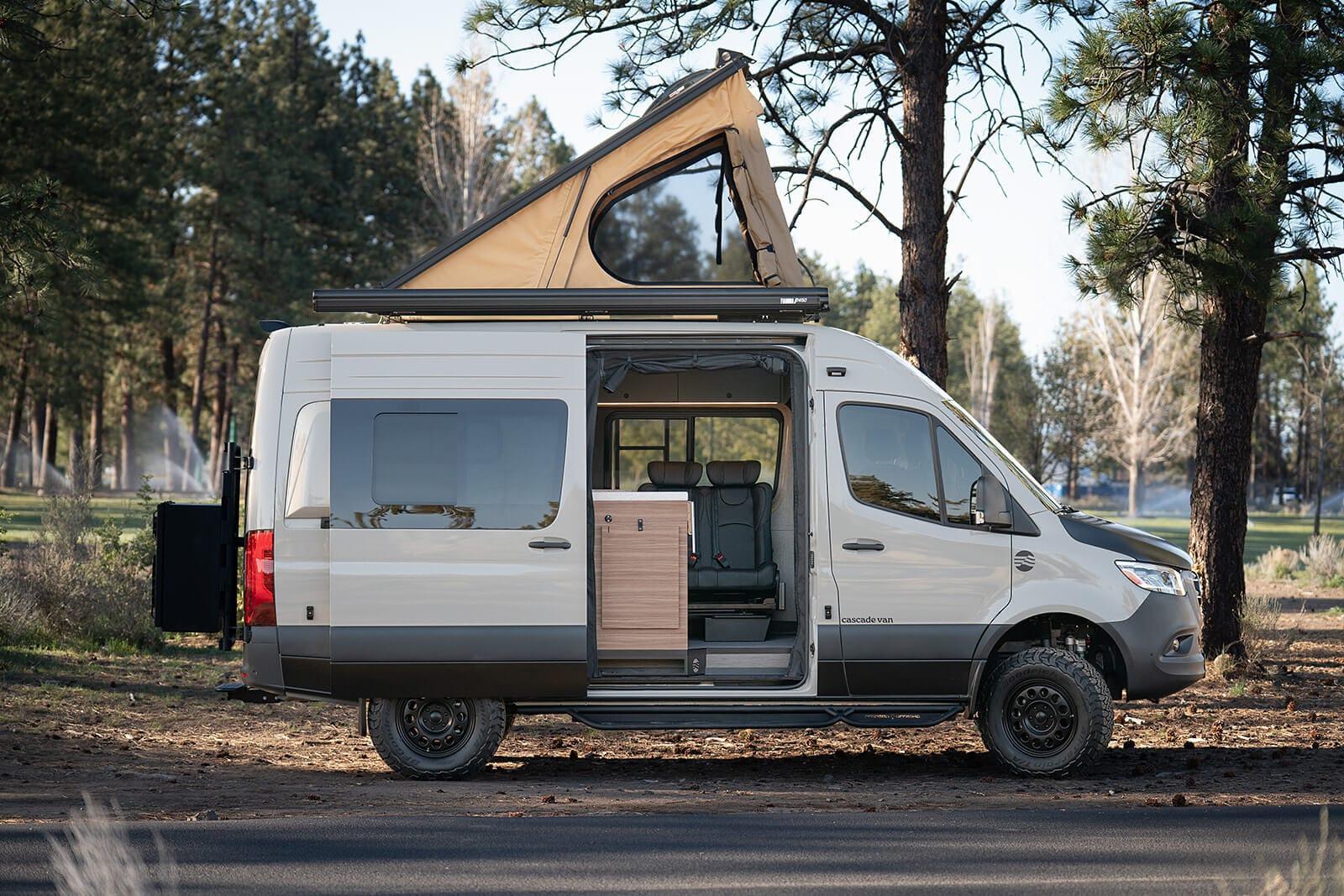
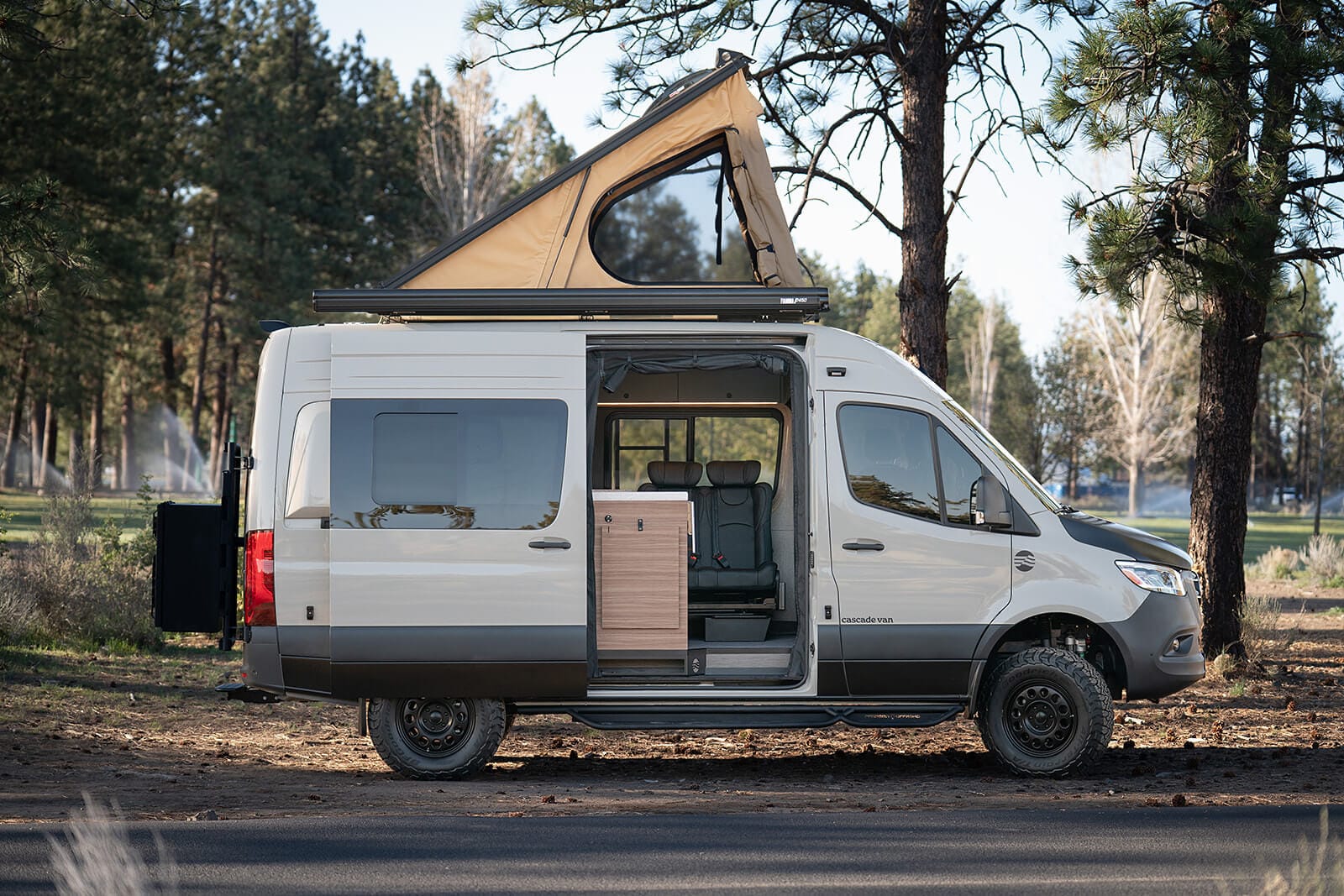
A pop-top is one of the most effective tools in a family van build. When the roof is up, you gain a genuine elevated sleeping area that keeps the main floor open for daytime living. Kids almost universally love sleeping up top, which also happens to be convenient for the adults who don't have to fold anything up before making breakfast. The separation of sleeping zones is real and meaningful, especially on longer trips when everyone needs at least the illusion of their own space.
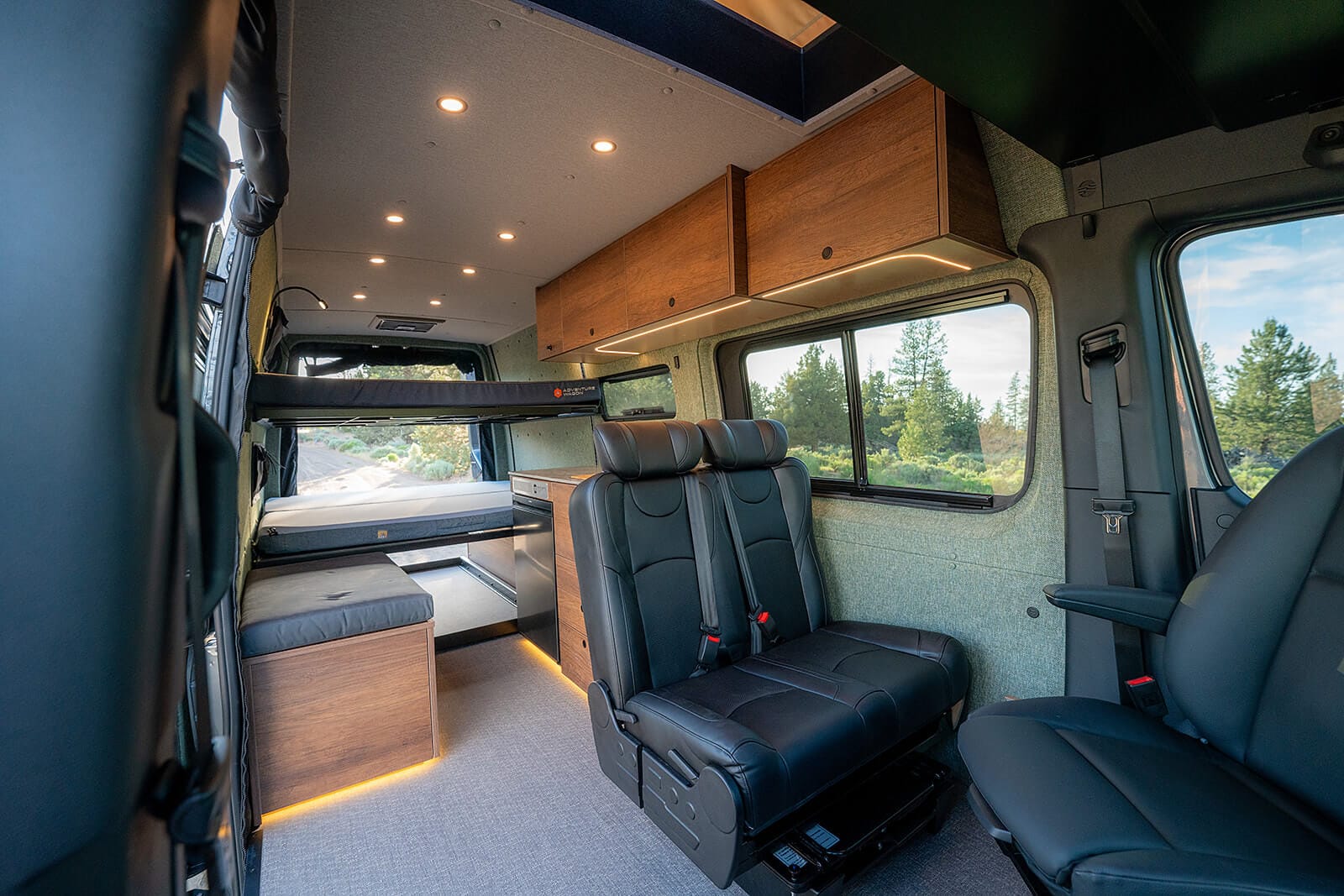
The pop-top configuration that gets requested most often for families combines the elevated bed up top with two sleeping positions on the main floor below. Properly executed, this creates a "seat 4, sleep 4" setup where four people can ride comfortably during the day and sleep comfortably at night without any major furniture gymnastics. It's the closest thing to a practical solution for a family of four in a Sprinter.
One thing worth keeping top of mind: any time you're modifying seating in a van, you need to take safety seriously. Proper crash-tested seating with correctly rated seat belts and anchor points isn't optional. This is especially true when kids are riding in the van. A pop-top layout that includes rear-facing or forward-facing child seats needs to be engineered around those specific requirements, not retrofitted as an afterthought. Builders who take this seriously will ask a lot of questions about your family's exact needs before drawing a single layout line.
 ×
What does a practical family van kitchen and storage system look like?
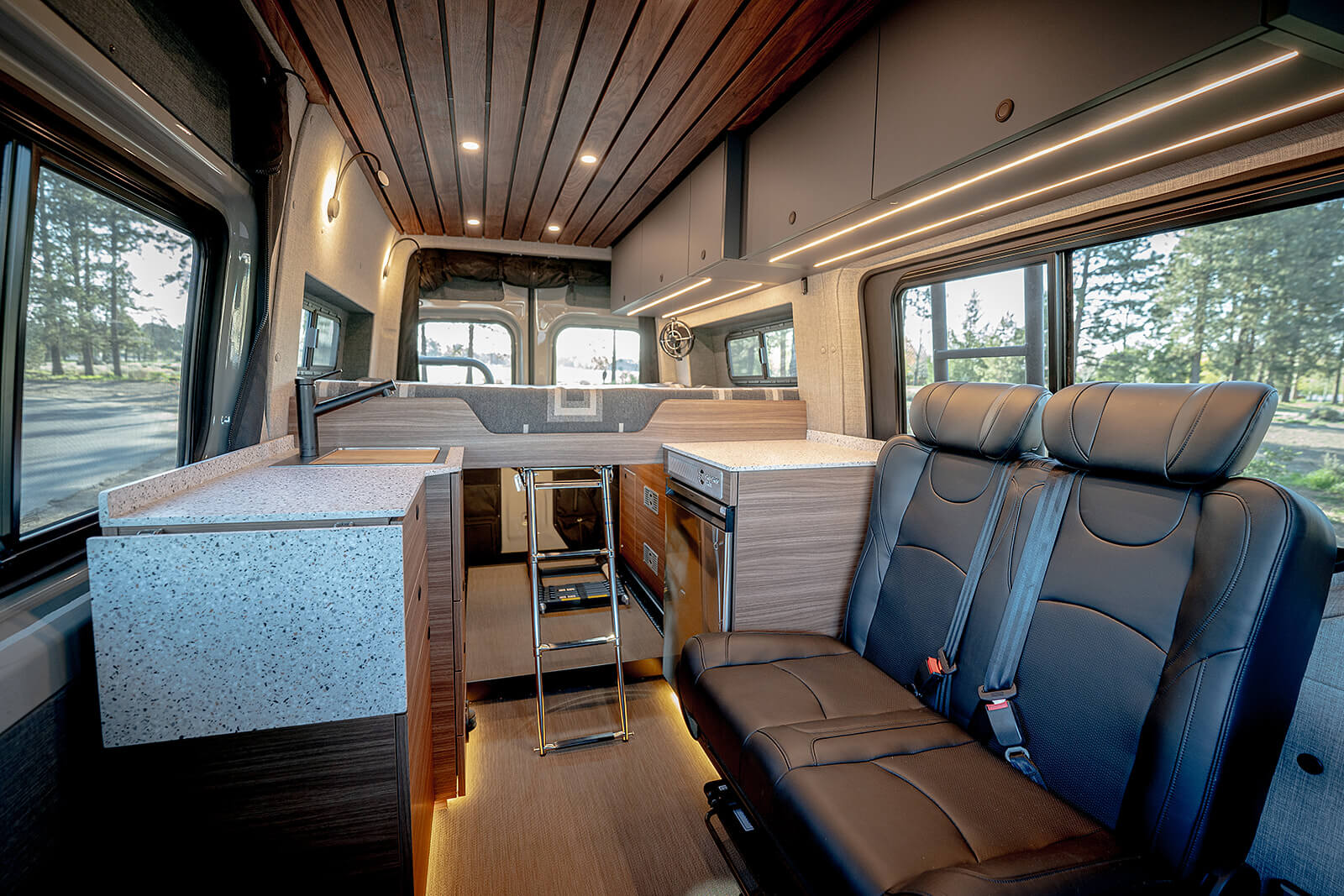
The kitchen in a family build needs to do more work than in a couples van. More cooking volume, more pantry space, a bigger water supply, and a sink that doesn't feel like a joke when you're washing dishes for four. Our standard cooktop is a single-burner induction unit, which sounds minimal until you understand the real advantage: it's portable. You can cook inside the van when the weather turns, move it outside to the camp kitchen on a nice evening, and stow it entirely when you need the counter back. For families who genuinely love cooking on the road, we'll spec a mounted two-burner induction stove instead—the tradeoff is permanent counter footprint for full two-burner capacity. On the cold side, our default is the Dometic NRX 115C. It's a real fridge with a small freezer that's big enough to actually matter—popsicles for the kids, ice for parents, whatever you need to keep frozen for a week out. We can size up if your family travels longer or eats bigger.
Storage in a family build has to be ruthlessly organized and clearly assigned. The vans that fall apart on day three of a trip are the ones where gear has no permanent home. Wet gear needs to live somewhere that doesn't soak everything else. Each kid needs a dedicated bin or locker they own and manage. Shoes, helmets, jackets, and hydration packs all need to come in and out of the van multiple times a day without turning the interior into a garage sale.
Under-bed garage storage is one of the most valuable features in a family layout. A rear-access pass-through that lets you grab a bike helmet without climbing into the van, combined with sealed interior storage for food and electronics, keeps the living space functional and the gear accessible at the same time.
How should a family van handle power and off-grid capability?
Families use more power than solo travelers. More devices charging, more lighting, a bigger refrigerator, potentially a small fan running overnight for the kids. A lithium battery system in the 200 to 400-amp-hour range with a properly sized solar array is the baseline for serious family off-grid use. Lithium matters here because it handles partial states of charge well, delivers consistent voltage under load, and bounces back faster after a cloudy day than older AGM chemistry.
Heat and hot water are where a family build either earns its keep or makes everyone miserable, and it's an area where we've taken a hard stance. Every standard Cascade Van comes with a Rixen hydronic system that handles both jobs from a single unit—there's no propane anywhere in the build, including the water heater. The Rixen sips diesel from the van's own tank and delivers effectively unlimited heat and unlimited hot water for as long as you've got fuel. It mounts in the garage area with air vents that distribute warm air through the cabin, runs quietly enough that kids can sleep through it, and gives you genuine four-season comfort whether you're winter camping in the Cascades or chasing shoulder-season at elevation. Closed-cell foam and high-quality insulation in the walls, floor, and ceiling round out the thermal envelope and keep that heat where you want it.
Hot water on demand changes what a trip with kids actually feels like. Plumbed to an outdoor shower or an interior wet bath, it means you can get everyone genuinely clean after a muddy trail day. It's not a luxury when you're traveling with children. It's just practical.
What layout options work best for multi-generational families?
Multi-generational travel is a growing use case, and it's one of the most interesting layout challenges in custom van building. Grandparents traveling with grandchildren, or parents who want to bring the whole extended family on a ski trip, have a unique set of needs. The adults want genuine comfort and easy access to a real bed. The kids want to climb, explore, and generally treat the van like a playground. The layout has to serve both groups without compromise.
The pop-top "seat 4, sleep 4" configuration is genuinely popular for exactly this reason. Grandkids take the top bunk (they'll fight over it), grandparents or parents get the main floor sleeping area at a more manageable height, and everyone has a seat for the drive. Step height and handholds matter more for older travelers, and a thoughtful builder will factor those in without making the van feel medicalized.
At Cascade Van, this is exactly the kind of build request that gets taken seriously from the first conversation. The Summit, Mt. Hood, and Cloudchaser layouts are the most requested starting points for family configurations. Each one has been designed with the structural flexibility to accept a pop-top, support child safety seating requirements, and scale up for multi-generational use. These aren't catalog items with a family option bolted on. They're built-out platforms that get customized around the specific humans who are going to live in them.
 ×
What makes a Sprinter the right base vehicle for a family build?
The Mercedes Sprinter in its 170-inch extended configuration gives you the most usable floor space in a standard cargo van platform. The high roof version adds standing room that matters a lot when you're getting four people dressed in the morning. The Sprinter's build quality, powertrain reliability, and broad parts availability make it a realistic choice for a vehicle you're going to depend on in remote locations.
Not every family needs the full 170”, though. The 144” Sprinter is the right call for plenty of families—weekend warriors who don't need three-week road trip capacity, anyone living somewhere with a strict HOA or a tight driveway, and families doing significant city driving where the shorter wheelbase makes parking, pickup lines, and daily errands genuinely easier. Our Summit and Cloudchaser layouts are both available on the 144” platform. The Mt. Hood is built on the 170” specifically and isn't offered shorter.
For families specifically, the Sprinter's structural rigidity also matters when you're installing proper crash-tested seating. The floor structure can be reinforced to support the anchor points that safety seats require, and the overall torsional stiffness of the platform holds up over rough roads better than some alternatives. These are the details that don't show up in lifestyle photography but matter when you're actually out there.
Building a family van is a significant investment. The layouts that hold up over years of real use are the ones that were designed around actual family logistics, built with quality materials, and executed by people who understand both the craftsmanship and the engineering. Done right, it's a vehicle that becomes central to how a family experiences the outdoors for the next decade.
How do you start planning a custom family van build?
The planning process for a family build takes longer than for a solo or couples van, and that's appropriate. You need to account for current child seat requirements, the ages and sizes of everyone who'll be traveling, the primary use cases (weekend ski trips versus three-week summer road trips versus both), and the gear load you're realistically carrying. That conversation is worth having in detail before a single measurement is taken.
Bring photos of your current camping setup. Bring a list of the gear you actually carry. Know whether you want a fixed bed or a convertible system. Think about whether a pop-top makes sense for your family's specific needs and travel style. The more specific you can be upfront, the better the final layout will serve you once you're on the road.
If you're ready to build a Sprinter van that genuinely works for your family, Cascade Van is the team to talk to. As an RVIA-certified custom builder based in Bend, Oregon, we specialize exclusively in luxury Mercedes Sprinter conversions built for serious four-season use. From advanced lithium power systems to high-end insulation and refined modern interiors, every van is engineered to perform in real backcountry conditions while staying genuinely comfortable for everyone inside. Whether you're planning a build for two parents and two kids, a multi-generational adventure with grandparents along for the trip, or something more custom than either of those, we can design a layout that fits your family's exact life. Reach out to start the conversation.