

Posted
Best Toilet Options for Camper Van Conversions
The toilet question comes up in almost every van build conversation, and it's one that people either overthink or completely ignore until it's too late. Neither approach serves you well. The reality is that your toilet choice affects your floor plan, your plumbing decisions, your daily routine, and how long you can comfortably stay off-grid. Get it right early, and it's a non-issue on the road. Get it wrong, and you're thinking about it constantly.
There's no single best answer here. The right toilet for a solo traveler doing weekend ski trips is different from what works for a couple living out of their van for six months. This breakdown covers the most practical options available in 2026, what each one actually involves day to day, and how to think through the decision for your specific situation.
What are the main types of toilets used in camper van conversions?
Most van builders work with three categories of toilets: cassette toilets, composting toilets, and vacuum-sealed toilets. Each handles waste differently, requires different levels of installation, and comes with its own set of tradeoffs around cost, convenience, and odor control. There are also basic portable options like camp toilets, but those aren't worth serious consideration for anything beyond a true emergency backup.
The category you choose will influence how your van is laid out, whether you need plumbing, and how you interact with dump stations or waste disposal on the road. It's worth understanding all three before you commit to anything.
How does a cassette toilet work in a van build?
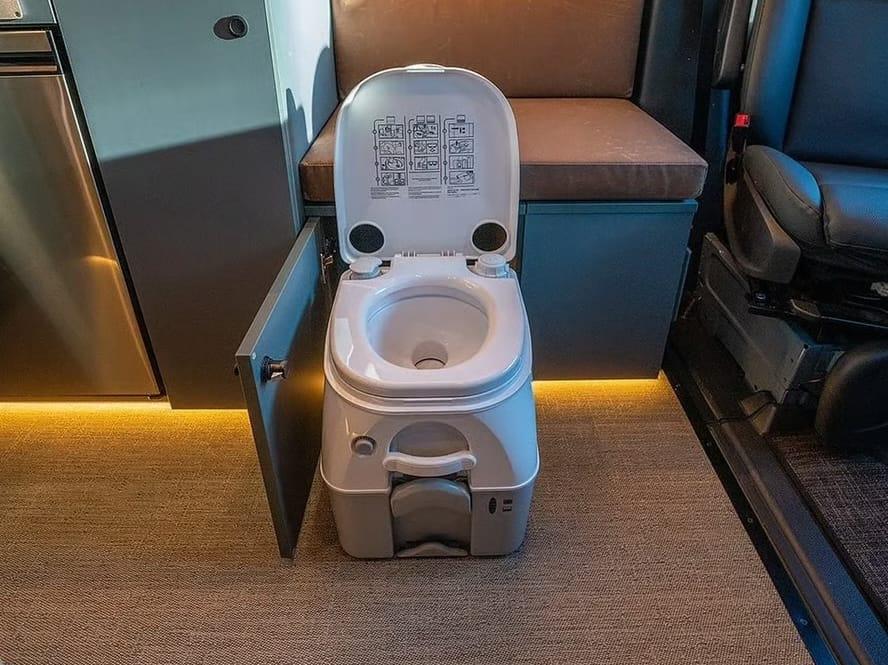
A cassette toilet looks and functions a lot like a standard household toilet. It has a fresh water reservoir that feeds a flush mechanism, and waste drops into a sealed, removable tank underneath called the cassette. When the cassette is full, you slide it out through an external access panel or directly from the toilet and empty it at a dump station or designated waste facility.
The Thetford cassette toilet is the most commonly used option in professional van builds, and the 5-gallon model tends to hit the sweet spot between capacity and footprint. It's compact enough to fit into most floor plans without major modification, it flushes like a real toilet, and the cassette is genuinely easy to remove and empty. Most campgrounds, RV parks, and truck stops with dump access will accept cassette waste without issue.
One thing to be aware of: cassette toilets do require chemical treatment in the waste tank to manage odor and break down solids. This is a minor ongoing cost, but some people have strong feelings about using those chemicals, especially in areas where grey water disposal rules are strict. If that matters to you, it's worth factoring in.
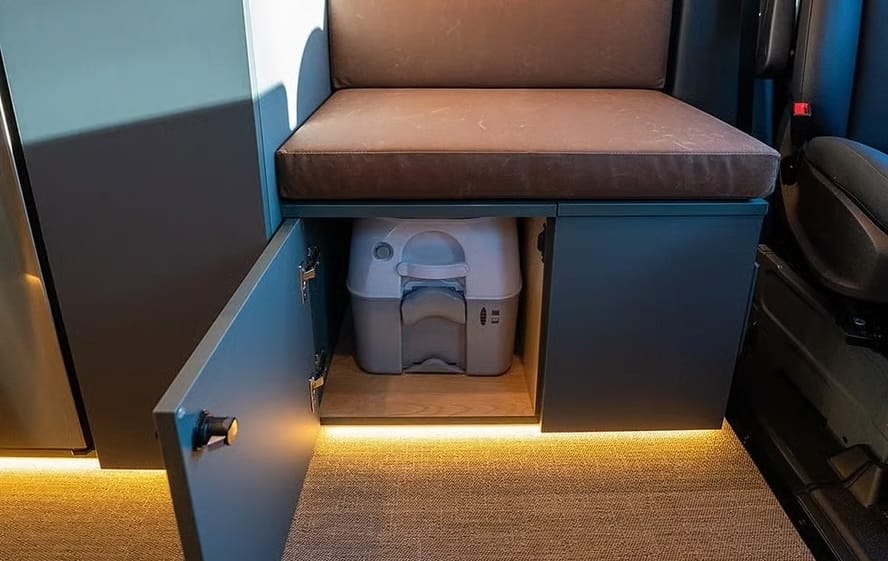
The cassette toilet is also one of the more portable-friendly options. If you want to be able to remove your toilet entirely when you don't need it, a cassette unit can be designed into the build so it slides or lifts out without tools. A lot of van owners appreciate that flexibility, especially if the van doubles as a daily driver or gets used for non-camping trips.
What is a composting toilet and is it a good fit for van life?
Composting toilets separate liquid and solid waste at the source, which is the key to why they work without water or chemicals. Liquids drain into a front bottle that you empty regularly (usually every few days depending on use), while solids go into a rear chamber mixed with a carbon material like peat moss or coconut coir. The separation of the two waste streams is what controls odor. When it's working correctly, there's very little smell.
The Trelino composting toilet has become a go-to option for a lot of van builders and their clients. It's well-made, reasonably compact, and available in a few different sizes to suit different build footprints. The design is clean and intentional, which matters when your bathroom is also your kitchen and your living room depending on the time of day.
No water hookup is needed, no black water tank, and no dump station required for the solid waste side. The solid chamber typically goes weeks between emptying under normal use, and when you do empty it, the waste can often go in a standard trash receptacle or compost bin depending on local rules. The liquid bottle needs more frequent attention, but that's a quick and easy process.
For people spending extended time in remote areas, composting toilets offer a real advantage. There's no dependency on dump stations, no chemicals to stock, and the whole system is low maintenance once you get the hang of the carbon ratio. Many clients who prioritize long-term off-grid capability end up choosing the Trelino for exactly this reason.
 ×
What are vacuum-sealed toilets and when do they make sense?
Vacuum-sealed toilets work by wrapping each use in a sealed, disposable cartridge or bag. The Laveo Dry Flush and the CompoCloset are the main products in this category worth looking at. There's no water, no chemicals, and no separation of waste streams. You use it, press a button, and the waste gets sealed and contained. When the cartridge is full, you swap it out and toss it in the trash.
The appeal is real: no odor, no plumbing, no dump stations, no liquid to manage. It's genuinely simple to use and very clean from an interaction standpoint. The downside is ongoing cost. Replacement cartridges add up, and you're producing more waste in the form of sealed plastic bags over time. These toilets also tend to require permanent mounting more often than cassette or composting options, which limits flexibility in the floor plan.
Honestly, most professional builders steer clients away from vacuum-sealed toilets unless there's a specific reason they make sense. The long-term cost and the plastic waste are real drawbacks, and the convenience benefit doesn't outweigh those for most full-time or serious part-time van lifers. But for someone who only uses the van a few times a year and wants the absolute simplest option possible, it's a realistic choice.
How do you decide between a fixed or removable toilet setup?
This comes down to how you use the van. If you want a toilet that's always there, ready to go, built into a dedicated bathroom space with a privacy curtain or door, then a fixed installation makes sense. Vacuum-sealed toilets almost always fall into this category by design.
If you'd rather have the option to pull the toilet out when it's not needed, or bring it along only on specific trips, cassette and composting toilets work much better. The "loo with a view" approach is genuinely popular: keep a portable unit stowed or set it up outside when the scenery calls for it, and tuck it back in the van for emergencies or rainy days. It keeps the interior cleaner and gives you more flexibility in how you use the space.
One thing to plan for: when a toilet is incorporated into a floor plan, its location sometimes needs adjustment to make everything work ergonomically and structurally. That can add to the overall build cost, so it's worth having that conversation early with your builder rather than retrofitting later.
What does a van toilet installation typically cost?
The toilet unit itself is just part of the equation. A Thetford cassette toilet runs roughly $600 to $1,200 depending on the model. Trelino composting toilets are typically in the $300 to $600 range. Laveo Dry Flush units start around $500, but the cartridge costs add up quickly with regular use.
Installation costs vary depending on where the toilet sits in the floor plan and what modifications are required. If the build needs to be adjusted to accommodate a specific toilet location, whether that's a dedicated wet bath, a cassette access panel in the side wall, or a compartment that allows for removal, that work adds time and cost. It's not a reason to skip having a toilet, but it is a reason to decide early and be specific about what you want.
 ×
Which toilet option works best for four-season van travel?
Cold weather adds one more variable: composting toilets can slow down their composting process significantly in freezing temperatures, but the separation function still works fine. Cassette toilets need to be monitored in hard freezes since the water reservoir and flush mechanism can freeze if the van isn't heated. Vacuum-sealed toilets are the least affected by temperature since there's no liquid component in the system itself.
For serious four-season travelers, a well-insulated van with a reliable heating system largely takes the temperature concern off the table. A van that stays warm at elevation in January is going to handle any of these toilet systems without issue. The insulation and heating decisions matter more than the toilet choice when it comes to cold weather performance.
Builds that are designed from the ground up for four-season use, with quality insulation, diesel heat, and thoughtfully integrated systems, give you the flexibility to use any toilet option without worrying about it. That level of systems integration is exactly what separates a purpose-built van from a rushed weekend conversion.
What should you ask your builder before choosing a toilet for your van?
Before you commit to a toilet type, make sure you understand how it fits into the broader floor plan. Ask where it will live, how accessible it is, whether the build supports removal if you want that flexibility, and what ongoing maintenance looks like on the road. If you're adding a bathroom space, ask how it affects the overall square footage and what other layout decisions it forces.
Also ask about odor venting. Composting and cassette toilets both benefit from a small 12V fan that vents odor outside the van. It's a small addition that makes a noticeable difference in day-to-day comfort, and it should be part of any serious build that includes a toilet.
The best builders will walk you through these decisions as part of a larger conversation about how you live and travel, not as an afterthought at the end of the design process.
At Cascade Van, toilet placement and selection is part of every layout conversation we have with clients from day one. We're an RVIA-certified custom camper van builder based in Bend, Oregon, and we build exclusively on the Mercedes Sprinter platform for a reason: it gives us the interior volume and structural flexibility to do things right. Whether you're leaning toward a Trelino composting system for extended off-grid trips, a Thetford cassette setup for easy dump station access, or something else entirely, we'll help you find the option that actually fits your life and integrate it properly into a build that works as a complete system. Our clients are skiers, mountain bikers, remote workers, and serious outdoor people who want a van that performs at the same level they do. If that sounds like you, reach out to the Cascade Van team and let's start the conversation.